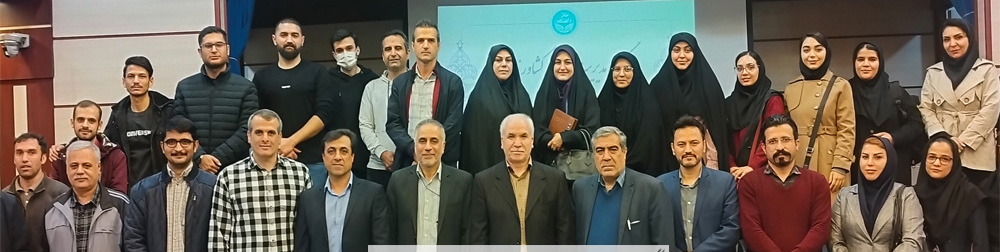
Department of Agricultural Management and Development
 

Department History

The Department of Agricultural Management and Development is one of the academic departments within the Faculty of Agricultural Economics and Development at the College of Agriculture and Natural Resources, University of Tehran. The proposal to establish the department was introduced concurrently with the establishment of the former Faculty of Agricultural Economics and Development in 2004, and the department was officially founded and housed in the new faculty building in 2009.

Although the department began its independent activities in 2009, its graduate programs have a longer history. The Master's program in Rural Development has admitted students since 1996, the Master's program in Agricultural Management (within the Department of Agricultural Economics) since 2001, and the Ph.D. program in Agricultural Development (within the Department of Agricultural Extension and Education) since 2002.

Aligning with the new fundamental approaches of the third millennium, the department pursues strategic goals focused on developing soft activities for sustainable development based on futures studies and systems thinking.

Mission

The core mission of the department, considering the need for optimal utilization of production and human resources, is "advancing knowledge, enhancing scientific capacity, and providing specialized human resources in the fields of rural development, agricultural management, and agricultural development." This mission is divided into two areas:

A. Educational Mission:

Enhancing the insight, knowledge, and skills of students in Rural Development, Agricultural Management, and Agricultural Development for sustainable and comprehensive development of agriculture and rural communities in Iran, so that graduates are resourceful, creative, entrepreneurial, capable, intellectually independent, and able to make effective contributions to society.

B. Research Empowerment Mission:

Empowering Master's and Ph.D. students to conduct fundamental, applied, adaptive, executive, operational, and developmental research aimed at theorizing, producing knowledge and technology in relevant fields.


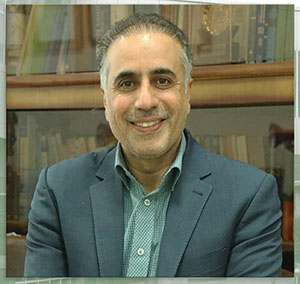
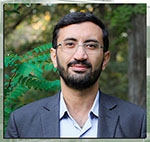
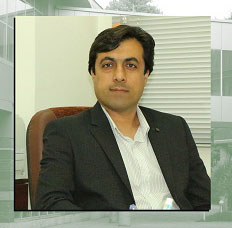
Dr. Ali Akbar Barati
Head of Department of Agricultural Management and Development
Degrees : Associate Professors
Tel : +98 26 32206824
E-mail : aabarati@ut.ac.ir
Profile :  https://profile.ut.ac.ir/en/~aabarati


Active Faculty Members​​​​​​​ 

Picture Name&Family Academic Rank Field of Study Profile cv
​​​​​​​
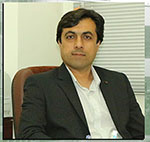
Dr. Ali Asadi Professor   https://profile.ut.ac.ir/en/~aasadi https://rtis2.ut.ac.ir/cv/aasadi/?lang=fa-iri
Dr. Khalil Kalantari Professor   https://profile.ut.ac.ir/en/~khkalan https://rtis2.ut.ac.ir/cv/khkalan/?lang=en-gb
Dr. Hossein Shabanali Fami Professor   https://profile.ut.ac.ir/en/~hfami https://rtis2.ut.ac.ir/cv/hfami/?lang=en-gb
Dr. Hojjat Varmazyari Associate Professor   https://profile.ut.ac.ir/en/~varmazyari https://rtis2.ut.ac.ir/cv/varmazyari/?lang=en-gb
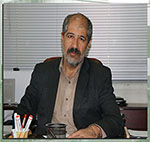
​​​​​​​ Dr. Ali Akbar Barati Associate Professor   https://profile.ut.ac.ir/en/~aabarati https://rtis2.ut.ac.ir/cv/aabarati/?lang=en-gb


​​​​​​​Retired Faculty Member 

Picture Name&Familt Academic Rank Field of Study Profile cv
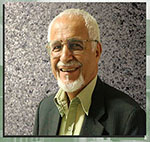
​​​​​ Dr. Hooshang Iravani Professor   https://profile.ut.ac.ir/en/~iravani https://rtis2.ut.ac.ir/cv/iravani/?lang=en-gb
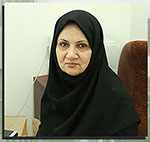
Dr. Zhila Daneshvar Ameri Associate Professor   https://profile.ut.ac.ir/en/~jdanesh https://rtis2.ut.ac.ir/cv/jdanesh/?lang=en-gb
​​​​​​​ Dr. Naser Motiee Assistant Professor   https://profile.ut.ac.ir/en/~nmotee https://rtis2.ut.ac.ir/cv/nmotee/?lang=en-gb


Picture Name Organizational post Tell
  Mr. Ahmad Mohammadi Expert +98 26 32206824


Books:

1. Kalantari, Khalil, Data processing and analyzing in social and economic research (using SPSS) (2016).

2. Kalantari, Khalil and Gholam Hossein, Abdollahzadeh, Spatial and land planning (2015).

3. Kalantari, Khalil, Quantitative models in planning (regional-urban and rural) (2012).

4. Kalantari, Khalil, Modeling of structural equations in socio-economic research (using LISREL software) (2011)

5. Kalantari, Khalil, Rural Sociology (2010)

6. Asadi, Ali, Akbari, Morteza, Sharifzadeh, Abolghasem and Alambeygi, Amir, Systematic approach to agricultural extension and development with emphasis on agricultural knowledge and information system (2010).

7. Iravani, Hooshang and Behravan, Zhaleh, Human resource management (new educational approaches) (2014).

8. Shabanali Fami, Hossein, Gharoon, Zahra and Qasemi, Javad, Management of agricultural systems in Iran (2011).

9. Shabanali Fami, Hossein and Karani, Zahra, Insurance of agricultural products (2013).

10. Mirkzadeh, Ali Asghar, Asadi, Ali and Akbari, Morteza, Extension planning (2010).

11. Soroush Mehr, Homa, Azami, Mousa and Iravani, Hooshang, Installations in rural buildings (2013).

12. Pouratasi, Mahtab, Shabanali Fami, Hossein and Faham, Elham, Green school: principles and implementing directives (2011).

13. Sorayapour, Javid, Sedighi, Hossein and Shabanali Fami, Hossein, Shabanali Fami, Hossein, Principles of urban agriculture (2011).

14- Saleh, Iraj and Varmazyari, Hojjat,The cost of environmental degradation (2014).


Selected Research and Projects:

Encyclopedia of Cooperation.


Department facilities, shared within the Faculty of Agricultural Economics and Development, include:

  • Cooperative Development Research Institute
  • Specialized Library
  • Informatics Center
  • GIS Workshop
  • Conference Halls
  • Classrooms equipped with hardware and software facilities


A. Master's Degree

The Master's program represents an intermediate level of higher education, covering advanced and specialized topics. It aims to train graduates capable of conducting educational activities, preparing for Ph.D. studies, and working in public, cooperative, and private sectors.

B. Ph.D. Degree

The Ph.D. is the highest level of graduate education, involving a review of advanced scientific and research findings. Students are expected to achieve intellectual maturity after mastering specialized concepts and theories, develop expertise, acquire a necessary worldview, and become capable of knowledge production.


Academic Programs

1.  Master's in Rural Development

During this two-year program, students learn the fundamentals and theories of designing, planning, implementing, and evaluating rural development projects, adapting global knowledge to Iran's rural context.

Given the diverse expertise required for rural development planning, professionals capable of integrating and guiding programs and aligning them with rural development goals are essential. The program aims to train holistic specialists for studying, planning, evaluating, and implementing rural development activities.

Graduates can work in organizations such as Agricultural Jihad, county and provincial agricultural service centers, Management and Planning Organization, Organization of Municipalities and Village Administrations, and Housing Foundation of the Islamic Revolution.

2. Master's in Agricultural Management

Designed for individuals with at least five years of experience in agricultural administration, agricultural service centers, or agro-industries, this program trains students to plan and implement production and commercial operations using problem-solving skills, environmental capacity assessment, techno-economic feasibility, and quantitative decision-making techniques.

Students learn management theories and gain abilities in organizing, planning, implementing, and controlling agricultural development processes. Graduates can work in county/provincial management, public/private agro-industries, project planning and evaluation at Agricultural Bank, and similar roles.

3. Ph.D. in Agricultural Development

This is the highest graduate level in agricultural and rural development, aiming to train specialists for analysis, explanation, policymaking, planning, and conducting micro and macro-level research in agricultural development.

​​​​​​​